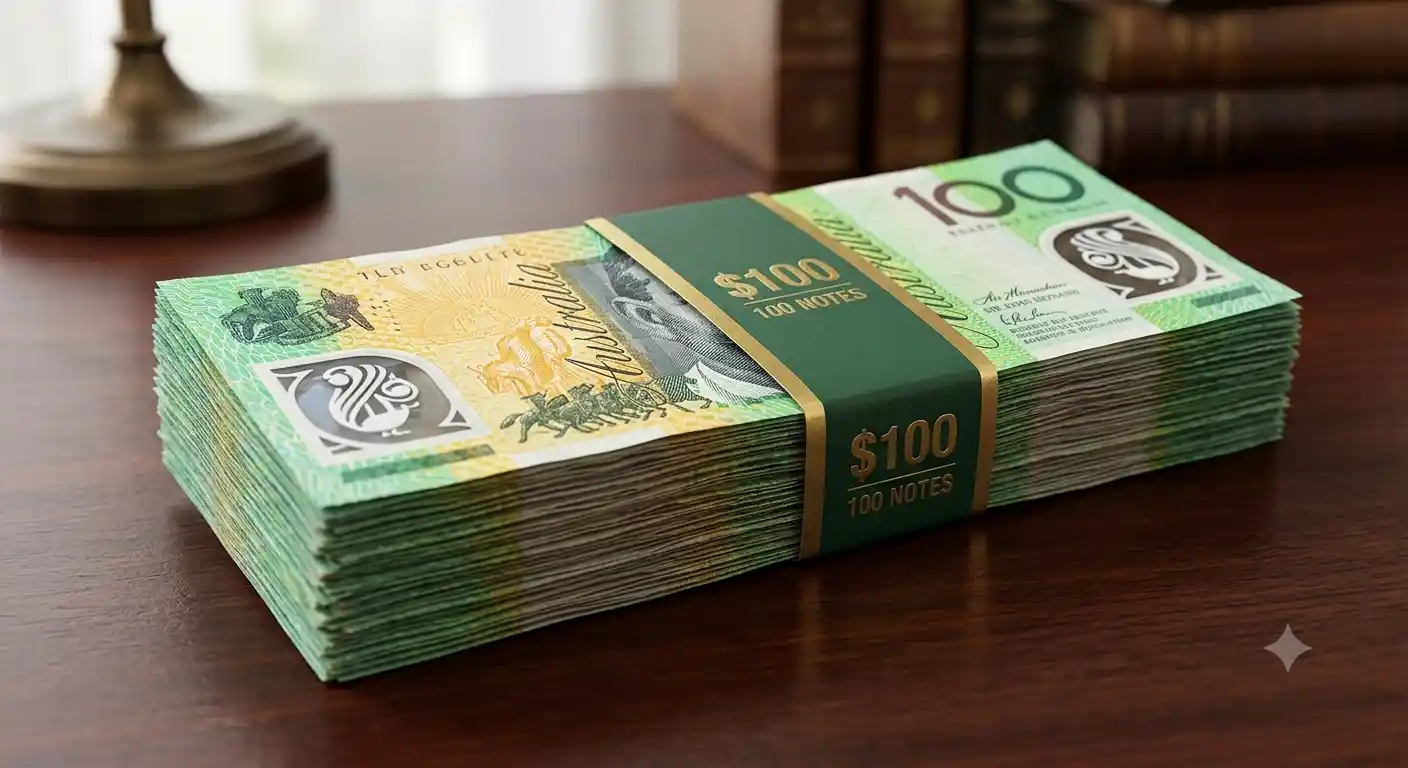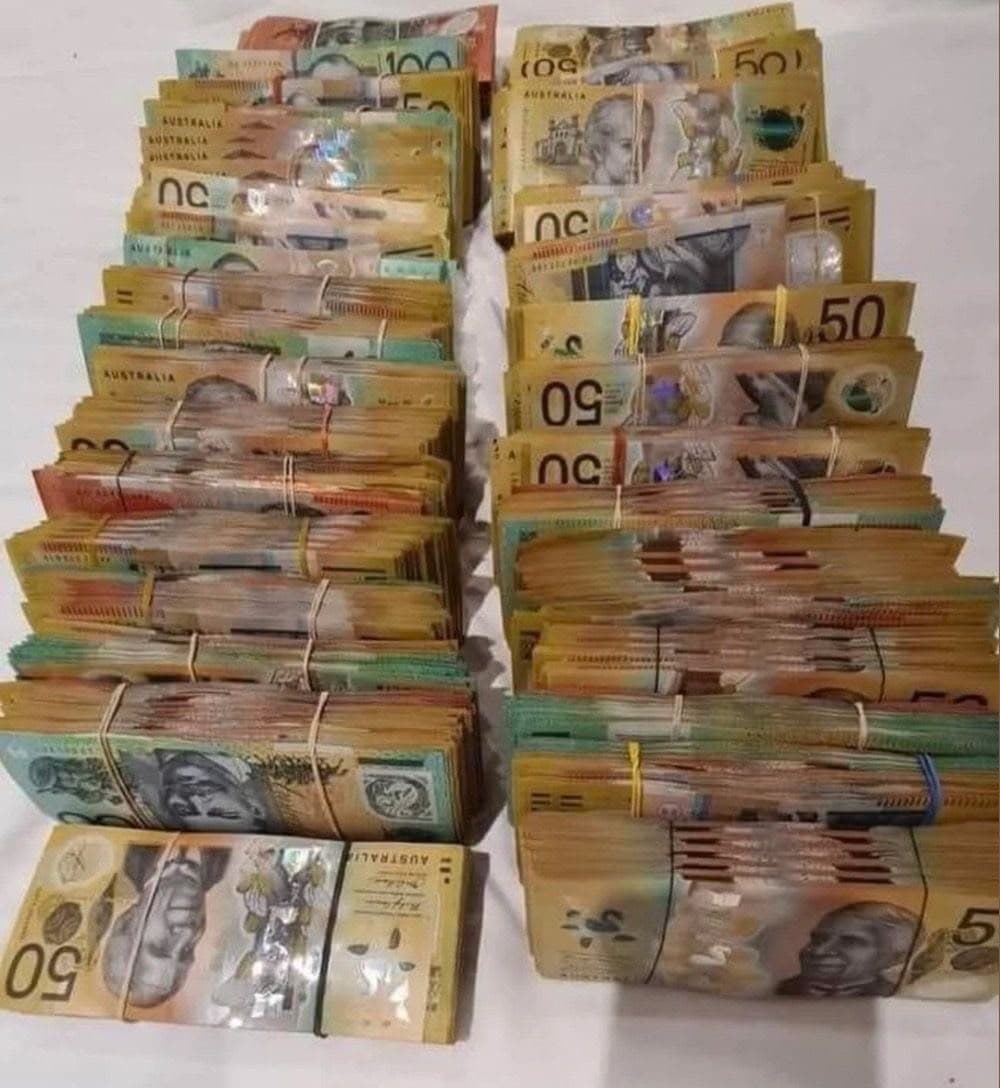
Is it illegal to buy prop money in Australia? In most cases, no. Buying clearly marked reproduction notes for a film, a stage show, a photo shoot or a training exercise is a normal business purchase. What is illegal is making, using or passing off notes that could deceive someone into accepting them as real money. This guide separates the two, explains the situations where people get into trouble, and gives you a plain checklist. It is general information, not legal advice.
The short answer
Buying prop money is lawful when the notes are clearly marked as reproductions, differ from genuine notes, and are bought for a legitimate purpose. The risk comes from what happens after the purchase: spending prop notes, presenting them as real, removing the markings or buying notes that were never marked in the first place. The Commonwealth Crimes (Currency) Act 1981 is the law that applies, and Section 22 is the provision our compliance standard is built around.
Buying, using and making are three different things
Most confusion comes from treating these as one question.
- Buying marked reproduction notes from a local supplier for production use is routine.
- Using them means handling them on set, in a studio or in a training room. That is lawful when the notes are marked, controlled and not offered as payment.
- Making reproductions yourself is where people fall into trouble, because a home-printed note that looks convincing has none of the safeguards a professional studio builds in. Do not make your own.
What keeps a prop lawful
Three things carry most of the weight, and a supplier should be able to show you each of them.
- It is marked. Every PROPPS note carries permanent specimen markings in line with Section 22 and the Reserve Bank's reproduction guidance.
- It is different. Real Australian banknotes are polymer. Our reproductions are printed on non-reflective archival paper, so they are easy to tell apart by touch.
- It is honestly sold. The product description states that the notes are non-legal tender props made for film, television, theatre, visual arts and simulation training.
Read more about how this works in our Section 22 guide and on our compliance page.
Situations that cause problems
The notes are rarely the problem. The situations around them are.
- Spending a prop note. Handing a prop note to a shop, a taxi driver or an ATM, even as a joke, is the fastest route to a police report.
- Pranks and stunts. A video of someone "paying" with prop cash can be treated as an attempt to deceive, whatever the caption says.
- Covering the markings. Removing, cropping or hiding the specimen markings changes the legal position of the notes.
- Buying unmarked notes. Notes with no markings, or with markings so faint they are easy to miss, are the main cause of trouble for buyers.
- Careless storage. Loose prop notes left in a car, a costume pocket or a rental can end up in the wrong hands.
- Cash giveaways. Content that suggests real cash is being given away, using prop notes, can mislead viewers and attract complaints.
Shooting in public places
If your scene is shot in a street, shop or bank, tell the venue or local police beforehand and keep the supplier's invoice on set. Staff and members of the public cannot tell what is a prop from a distance. A short written note from the production company and a call to the local station can prevent a long afternoon.
Two further habits help. First, keep notes under the prop master's control and count them in and out each shooting day. Second, never let background performers keep souvenir notes. Even a single marked note in a wallet can turn into a question that nobody wants to answer.
What if you are asked about a prop note?
Stay calm and show the markings. Explain that the note is a reproduction made for production use and show the supplier invoice. If you are speaking to police, it is reasonable to offer the supplier's details and the production file. Buying from a local, ABN-registered studio makes this simple. Overseas sellers on marketplace sites usually cannot supply any of it. For concerns about counterfeit currency, the Australian Federal Police is the point of contact.
Crossing borders with prop money
Carrying prop notes into or out of Australia raises extra questions. Customs officers see a bundle of banknote-like paper and have to decide what it is. Declare the notes, carry the invoice and keep the markings visible. If you are travelling for a shoot, ask the production's customs broker or legal adviser before you pack. Shipping from a local supplier with traceable dispatch is almost always simpler than carrying notes in luggage. Read about our shipping and dispatch options.
What insurers and location owners usually ask for
Insurers and location owners are not lawyers, and they rarely ask for legal analysis. They want to know three things: what the notes are, who supplied them and who is responsible for them. A short file covers all three:
- The supplier's invoice, with the business name, ABN and address.
- A photo of the front and back of a note, showing the specimen markings.
- A line in the call sheet or prop schedule naming the scene and the person in charge of the notes.
Bring the same file to any public location shoot. It turns a long conversation with a nervous venue manager into a short one.
Common myths
"It is only illegal if you spend it." Spending is the clearest problem, but removing the markings, presenting prop cash as real or buying unmarked notes also create risk.
"Prop money is illegal everywhere." It is not. Marked reproductions are a normal supply item in the Australian film, theatre and photography industries.
"A home-printed note is cheaper and just as safe." It is neither. A home-printed copy has no specimen markings and no supplier paperwork, and a convincing copy is exactly what the law is written to catch.
Why we publish this guide
PROPPS PTY LTD supplies prop currency to Australian productions, and the question we hear most often is whether the purchase itself is a problem. We would rather answer it plainly on a public page than leave buyers to guess from forum posts or from sellers who have a reason to say "no problem at all". If you read nothing else, remember the order of operations: buy marked notes from a supplier you can identify, keep the paperwork, control the notes on set and never offer them as payment.
Is it illegal to buy play money or party money?
Buying play money, toy money or novelty party notes is not illegal. They are designed to look nothing like real currency. If you want something a little more realistic for a themed event, choose marked notes from a local supplier and keep them out of circulation. Our novelty money guide and event and party props suit that use.
A practical checklist before you buy
- Confirm the notes carry permanent specimen markings, and ask for a photo of the front and back.
- Buy from an Australian business with an ABN and a physical address.
- Check the notes are paper, not polymer.
- Make sure the product page states the notes are non-legal tender props.
- Choose signed-for delivery.
- File the invoice and a note of the production use.
- Brief everyone who will touch the notes: never spend them, show them off as real cash or post unmarked close-ups.
Where to go next
If you are ready to order, start with the New Notes range or the $100 product. If you want to know whether you can buy prop money in the first place, read can you buy prop money in Australia. Orders start at $300 AUD, delivery is free from $500 AUD, and every parcel ships Australia Post Express with signature on delivery.
This article is general information, not legal advice. Check the current Act, the RBA's guidance and your own legal adviser for a specific production.