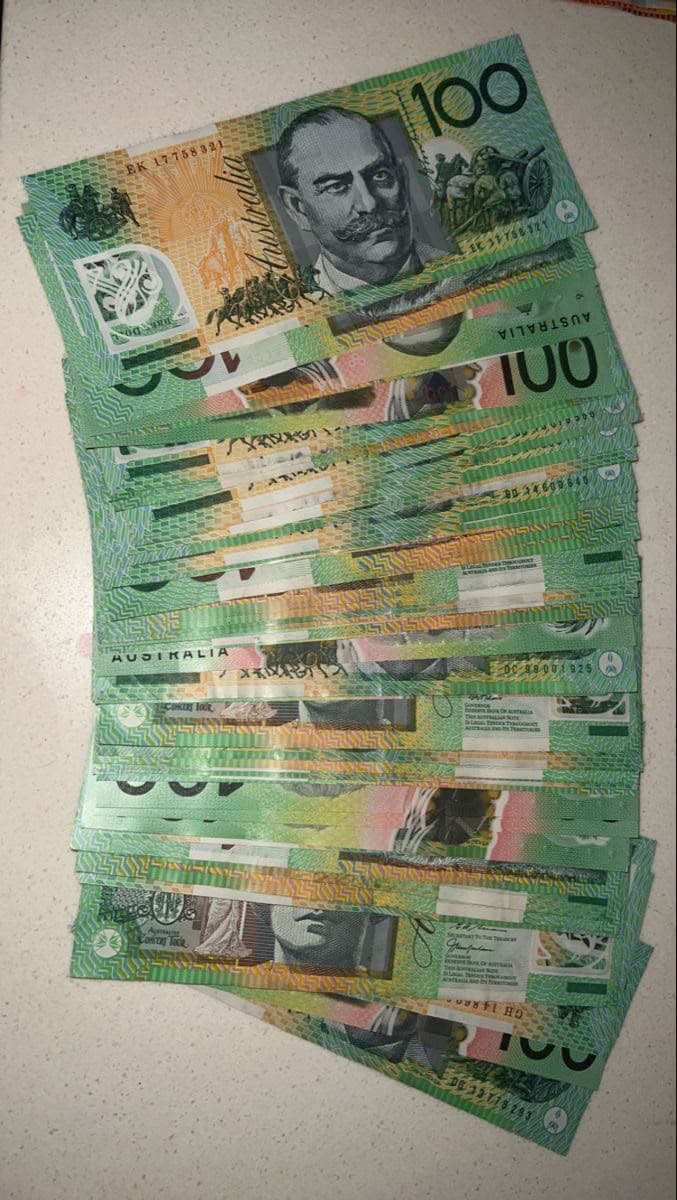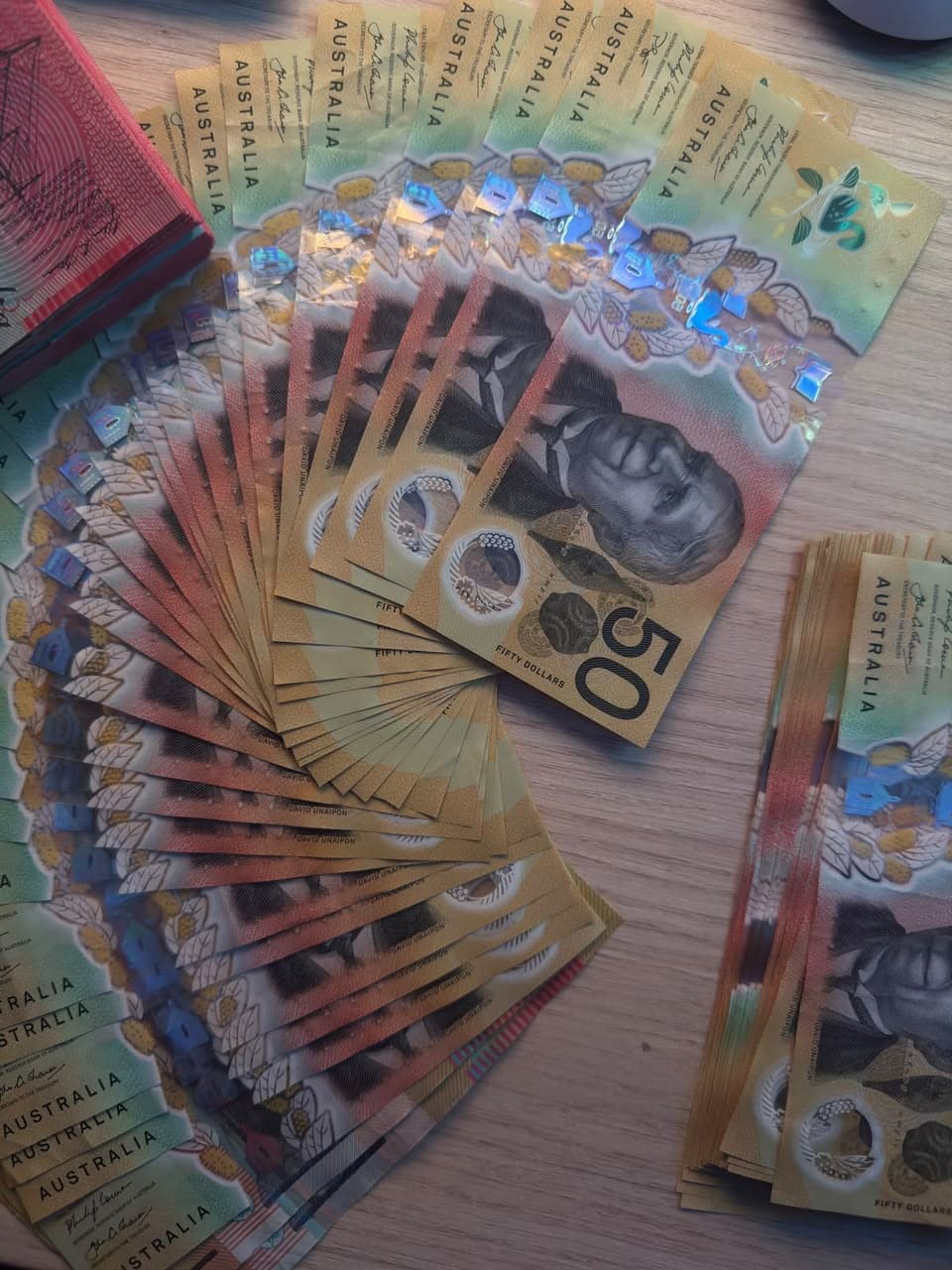
A period drama set in the 1970s does not want a crisp note from last year in the till. A story set in the 1960s may need a different currency altogether. Getting old Australian money notes right on screen takes a little knowledge of the history, because the colours, sizes, designs and even the materials of Australian currency have changed several times. This guide is a short history of Australian banknotes written for set designers, art directors and prop masters. It is not a collectors' catalogue and not a guide to identifying genuine notes. It explains the main eras, what changed and how to dress period cash on screen. All PROPPS notes are specimen-marked, non-legal tender props.
The short answer
Australia moved from pounds to dollars in 1966, issued paper notes for several decades, introduced polymer banknotes from 1988 and has been updating its designs ever since. For a period set, work out the year of the scene, check what was in circulation and agree the level of accuracy with the director. Many productions choose a plausible look and weathering rather than an exact match, and always keep the notes clearly marked as props.
Before decimal currency
Before 1966, Australia used pounds, shillings and pence. Notes were issued in pound denominations and were larger and plainer than modern notes. A scene set before the mid-1960s needs a different currency entirely, so the dollar notes in our range are not suitable. For these stories, talk to a specialist prop house and the production's researcher.
The move to dollars
Decimal currency was introduced in February 1966. The first dollar notes were printed on paper, with a family of colours that made each denomination easy to tell apart. For scenes set from the late 1960s through the 1980s, paper notes with these older looks would have been in the till. These notes are different in size, colour and design from modern notes, so a period set that uses a modern note will look wrong to anyone who remembers the era.
The polymer era
Australia was an early adopter of polymer banknotes, with the first issued in 1988 for the bicentenary, and a full polymer series followed in the 1990s. Polymer notes last longer, have clear windows and are harder to copy. For scenes set in the 1990s and 2000s, the notes in a wallet would be polymer, with the designs of that series.
The current series
The Reserve Bank has updated the designs in recent years, introducing new security features and new artwork across the denominations. The current series is what appears in contemporary stories. The Reserve Bank publishes information on its banknotes. Our range covers the five current denominations: $5, $10, $20, $50 and $100. See the New Notes range.
What this means for set design
- Decide the year of each scene. A story that jumps between decades may need different cash in each timeline.
- Work out what is visible. Many scenes show only a corner of a note, which makes accuracy less critical.
- Match the wear to the era. Old paper notes were soft and often creased. Polymer notes keep their shape longer.
- Choose accuracy to suit the shot. A close-up on a note needs more care than a background till.
- Ask for advice. A researcher, a dialogue coach or a prop house with period experience can save a lot of time.
Dressing period cash with current notes
If a production cannot source period notes, an art department sometimes dresses current-style notes to suggest age. This is a compromise, and it only works when the notes are in the background or the shot is wide. Our notes are matte paper with a soft finish, and they take weathering well. Read our art department guide to weathering prop cash for methods. Avoid close-ups of a note that is visibly the wrong era.
Colours and denominations over time
Denominations have changed along with the designs. The mix of notes that a character would carry in 1975 is not the mix a character would carry today. The $100 note is now associated with large payments, but in earlier decades the largest note in everyday use was lower, and a bundle of the top denomination would look different on screen. When in doubt, ask your researcher what the character would plausibly carry in the year of the scene.
Period details that matter more than the note
Often the details around the money say more about the era than the note itself. A leather purse, a brown envelope, a pay packet with a name on the front, a cash register with mechanical keys, a coin tray, an old wallet with a worn crease: these are the details the camera picks up. Spend time on them, and the notes will sit comfortably alongside.
Planning quantities for a period scene
Period scenes often use less cash than modern ones, because people carried smaller sums and used fewer large notes. A pay packet might hold a handful of notes. A shop till might hold a drawer of small denominations. Our guide to how much prop money you need for a scene explains how to count what the camera sees.
Compliance
Whatever era you dress, the notes must be clearly marked props. Every PROPPS note carries permanent specimen markings, is printed on paper rather than polymer and is sold as a non-legal tender reproduction for motion pictures, television, theatre, visual arts and simulation training. Never spend them. Read our Section 22 guide and the compliance page.
Delivery and ordering
PROPPS orders start at $300 AUD, ship by Australia Post Express with signature on delivery and are free to deliver from $500 AUD. Crypto payments receive a 10% discount.
A short method for researching your era
- Fix the year. Write the year on the scene breakdown.
- Find reference photos. Archive photographs, adverts and film stills of the era show cash in use.
- Check with a researcher. Many productions have one, and local libraries and museums often help.
- Decide the level of accuracy. A close-up needs more than a wide.
- Record the decision. Put it on the prop schedule so the next department knows.
What to ask the director
Ask how visible the money is, whether any shot is an insert on a note, how much the era matters to the story and whether the production will have audiences who know the era well. A period drama broadcast to an audience that lived through the decade will notice a wrong note. A comedy with a quick cut to a till may not. The answers set the budget and the effort.
Three period examples
A 1970s pay packet. A brown envelope with a name on the front, a handful of notes inside and a few coins. The camera sees the envelope and a corner of paper, so the note itself matters little. Spend the effort on the envelope.
A 1990s shop till. A drawer of mixed notes and coins, with a cash register in view. The register and the receipts carry the era. A few matching notes are enough.
A modern wallet. The camera sees a few notes as a character pays. Use current-series notes, lightly weathered. Our New Notes range covers this.
Period mistakes to avoid
- Using a current note in a period close-up. Anyone who remembers the era will notice.
- Over-ageing. Notes in a wallet are soft, not filthy.
- Forgetting the supporting detail. Wallets, envelopes, registers and receipts date a scene more than the money does.
- Ignoring the shot. If the note is out of focus, do not pay for accuracy you cannot see.
- Skipping the paperwork. Even period reproductions must be marked and documented. See our compliance page.
Working with the rest of the art department
Cash is only one part of a period look. Talk to the costume department about wallets and purses, to the set decorator about registers and counters and to graphics about receipts and pay packets. Agreeing the details together means the money is never the odd one out in a frame.
Where to go next
See the best Australian banknote denominations for film and TV, browse the New Notes range or contact the studio with your period and your scene list.