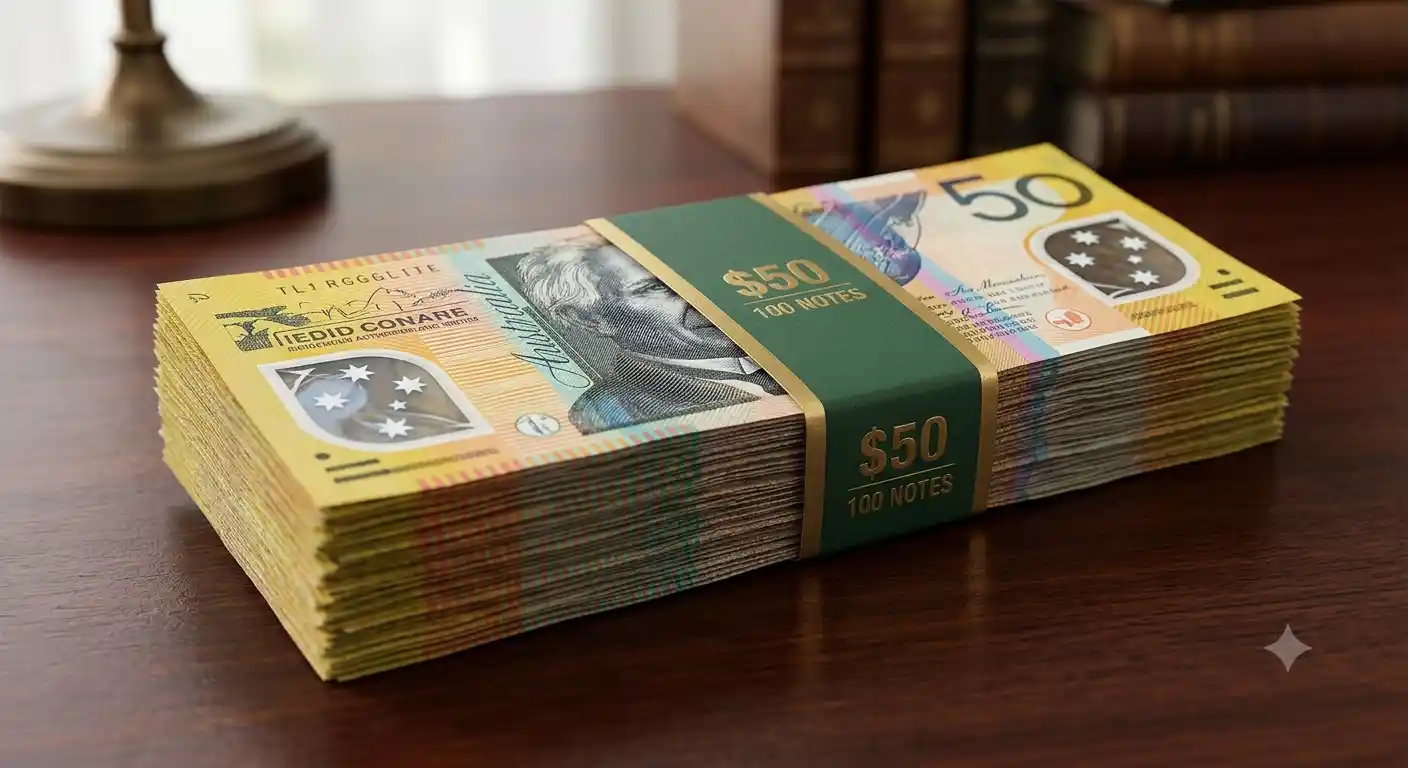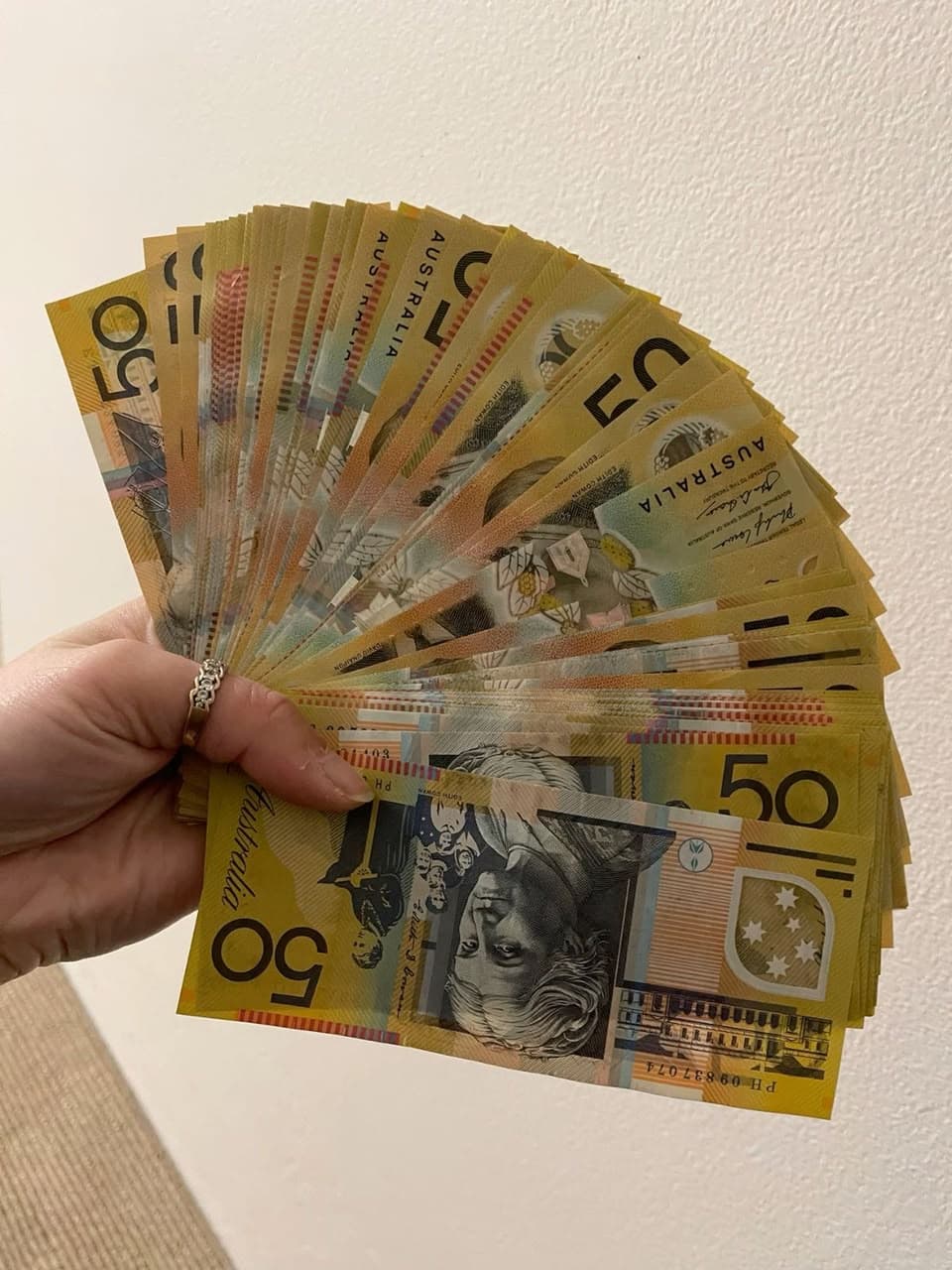
High quality prop money is easy to spot once you know what to look for, and just as easy to miss if you judge it from a product photo. A render can hide soft print, glare-prone paper and edges that curl after two takes. This guide gives you a practical way to judge prop money before your shoot: four checks for the notes themselves, tests you can run under your own lights, questions to put to a supplier and the red flags that tell you to walk away. It is written for art departments, photographers and directors. All PROPPS notes are specimen-marked, non-legal tender props.
The short answer
Judge prop money on four things: print detail, paper, double-sided finish and handling. Then test a sample under the lighting you will actually use, both at arm's length and up close. Quality is not about looking identical to a real banknote. It is about reading correctly on camera while staying clearly marked and different in the hand.
Check 1: Print detail
Fine line work is the first thing to fail in a cheap print. Hold a note at arm's length: the main design, portrait and colour blocks should look clean. Then bring it close: fine lines should stay crisp rather than turning into a blur or showing visible dots. If you are shooting a close-up of a hand counting notes, the lens will see the fine detail. If the print softens at your working distance, it will soften on camera.
Look at colour as well as detail. Saturated colourways such as the gold of the $50 and the green of the $100 should read as deep, even colours, not flat or patchy. Check that the colours match across a stack, because two print runs that do not match are a continuity problem.
Check 2: Paper
Paper decides how a note behaves under lights. A glossy or reflective stock throws hot spots into the lens, and a thin stock looks flimsy as soon as an actor handles it. Matte, non-reflective stock handles naturally and avoids glare under studio lighting. PROPPS notes are printed on 120gsm archival paper, which is heavy enough to feel like a note and matte enough to stay out of trouble with a lighting rig. Our guide to lighting prop money on camera without glare goes through the lighting side.
Paper also matters for compliance. Genuine Australian banknotes are polymer, so a reproduction on paper is easy to tell apart by touch. That is a deliberate feature, not a compromise.
Check 3: Both sides
Many cheap prints are one-sided or have a rough reverse. That matters whenever an actor fans, flips or counts notes, because the camera will see the back. Check that both sides carry the same print quality, and that the reverse is aligned with the front. Our notes are printed double-sided, so a fanned or flipped stack looks right.
Check 4: Handling
A scene may need ten takes. Notes should survive repeated handling without curling, creasing badly or tearing. Test a sample note by folding it once, fanning it and counting it through your fingers a dozen times. Look at the corners and edges. If the corners round off or the edges fray in a few minutes, the notes will not last a day on set.
A simple on-set test
Before you commit to a large order, run this five-minute test with a sample:
- Light it as you will shoot it. Use your actual key light, practicals and any bounce.
- Check at working distance. View the note through the lens or monitor at the distance of your wide, medium and close shots.
- Tilt it. Rotate the note slowly and watch for hot spots and reflections.
- Handle it. Fan, flip, count and fold it a dozen times.
- Compare to your other props. Put it next to the wallet, the bag or the desk it will sit on.
- Take photos on the camera you will use. The monitor lies less than a product page does.
Questions to ask a supplier
Good suppliers answer these directly. Evasive answers are a warning.
- Can I see a close-up photo of an actual note, front and back?
- What is the paper stock and weight?
- Are the notes printed on both sides?
- Are the specimen markings permanent, and where are they?
- Can I order a sample or see a hand-held video?
- How are the notes counted and strapped?
- Do I get an invoice and written product description for the production file?
- How is the order delivered, and is a signature required?
Red flags
Quality and honesty tend to travel together. Walk away if you see:
- Renders instead of photos. If every image is a mock-up, the real product may not match.
- No specimen markings. Unmarked notes are the biggest risk for buyers.
- Claims of undetectable quality or passing tests. That is the wrong promise for a prop.
- Government clearance claims with no source. Regulators do not approve individual prop sellers.
- Unmarked or discreet packaging as a selling point. Legitimate props do not need to hide.
- No Australian business details. You should be able to see an ABN and an address.
For more on weighing up suppliers, read where to buy prop money in Australia legally and local vs overseas prop money suppliers.
What quality means for different shoots
The same note is judged differently depending on the job:
- A feature film close-up needs crisp fine detail, accurate colour and a natural feel in the actor's hand. Judge the note at working distance and check both sides.
- A television drama often shoots fast with multiple set-ups, so handling and matching stacks matter as much as print detail.
- Theatre is viewed from a distance, so colour and durability matter more than the finest line work. Notes get handled every night.
- Photography shows everything at high resolution and under controlled lighting, so paper finish and glare control matter most. Read our photography guide.
- Content creators shoot on phones and small cameras, where bright, saturated colour and clear markings read well. See the guide for content creators.
Keeping prop money in good condition
Even good notes can be ruined by poor storage. Keep them flat, dry and out of direct sun. Avoid leaving them in a hot car, where edges curl. Keep them strapped and in the box until the scene. Handle them by the edges, and keep a few spare notes for hero shots so the best ones are not handled more than needed. At wrap, count the notes in and store them with the prop master, never loose in a bag or costume.
Quality is not the same as cost
A higher price does not guarantee quality, and a low price does not always mean poor quality. What matters is whether the price covers the things you cannot see on a product page: paper weight, double-sided alignment, consistent colour between runs, counting and strapping, paperwork and delivery. Our guide to cheap prop money and what you are really paying for goes through the trade-offs. At PROPPS, orders start at $300 AUD, delivery is free from $500 AUD and payments in cryptocurrency receive a 10% discount.
Match quality to the shot
Not every shot needs the same level of detail. A close-up of a hand counting notes needs hero-quality print and handling. A wide of a vault needs volume, and a shallow depth of field will blur the bundles at the back. Put your best notes where the camera is close and use stacks for the rest. Our guide to $100 prop money bundle sizes shows how to split an order between hero and background stacks.
Compliance still matters
High quality does not mean realistic enough to deceive. Every note we sell carries permanent specimen markings, is printed on paper rather than polymer and is sold as a non-legal tender prop for motion pictures, television, theatre, visual arts and simulation training. Keep the notes under the prop master's control, never spend them and never post unmarked close-ups that suggest the cash is real. Read the Section 22 guide and visit the compliance page for the full standard.
Where to go next
See the print for yourself in the $50 product or the Film & TV props range, or contact the studio with your lighting setup and we will help you pick.